After we finished all six experiments, students put all their documentation together into a book.
08 febrero 2015
Los Pequenos Cientificos
After we finished all six experiments, students put all their documentation together into a book.
03 febrero 2015
Making Connections at Burchfield
Our most recent adventure to the Burchfield coincided with the visit from the governor! Very exciting, but unfortunately limited our access to the museum.
We were initially exposed to a new exhibit that included light. (Meanwhile, in the classroom, we had been investigating weather....) The minute we walked in, Wilberto said it looked like lightning! A great connection to the theme we had been studying!
16 enero 2015
The Buffalo Museum of Science
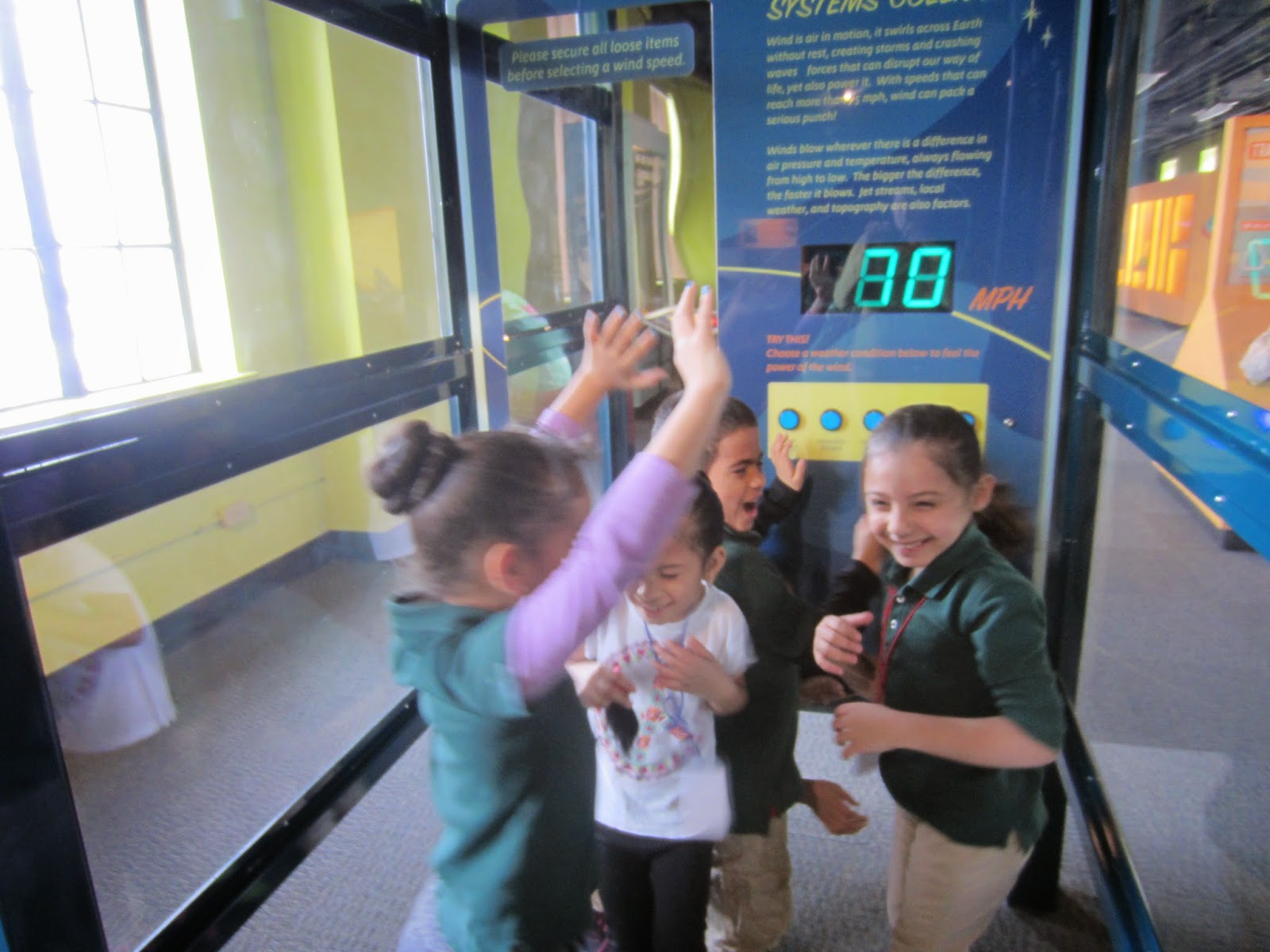
Later we moved upstairs...and we just did not have enough time. The students were having so much fun exploring the different exhibits and exploring new concepts. We spent time in the Movement and Our Earth exhibit. They found a weather machine that replicated the wind velocity of different storms, an earthquake simulation, building a dam, and much more.
After lunch we began the workshops. There were three- Circulation, Muscular, and Skeletal.
During the Circulation workshop, the students were able to see actual lungs and simulate the inflation of lungs.
In the Muscular workshop, the docent explained the different types of muscles and their functions. The students did different exercises to activate their muscles.
This excursion was a fantastic way to introduce our mid-year theme, the human body. The students are so interested in their own bodies and their functions!
06 enero 2015
Inside Our bodies
This week we began our unit on the human body. The theme began by asking the students to draw a picture of what their heart looks like. Then we asked the question:
What's inside your body?
Here are some of the responses:
Wilberto: Our hearts.
Tatiana: Our skeletons.
Kiarelys: Heart and air.
Lia: Blood.
Miguel: Your heart and your brain.
Ericsson: Bones.
Elias: Bones.
Yarilys: You got blood, you got your heart, you got your brain.
Aixa: Skeleton.
Shedialys: Bones.
Marangeliz: Sangre.
Yadiel: Corazon.
Jathems: Cerebro y carne.
Over the past couple weeks, we have explored different concepts related to the body. Some students have been monitoring their heart after different physical activities in the classroom. Some students have created observational drawings of the organs. Also....some students have explored the human body through our literature available in the library and classroom.
01 enero 2015
Mandalas
We have worked on equations in math since the beginning of the year. We solve them, write them, create stories for them, and balance them.
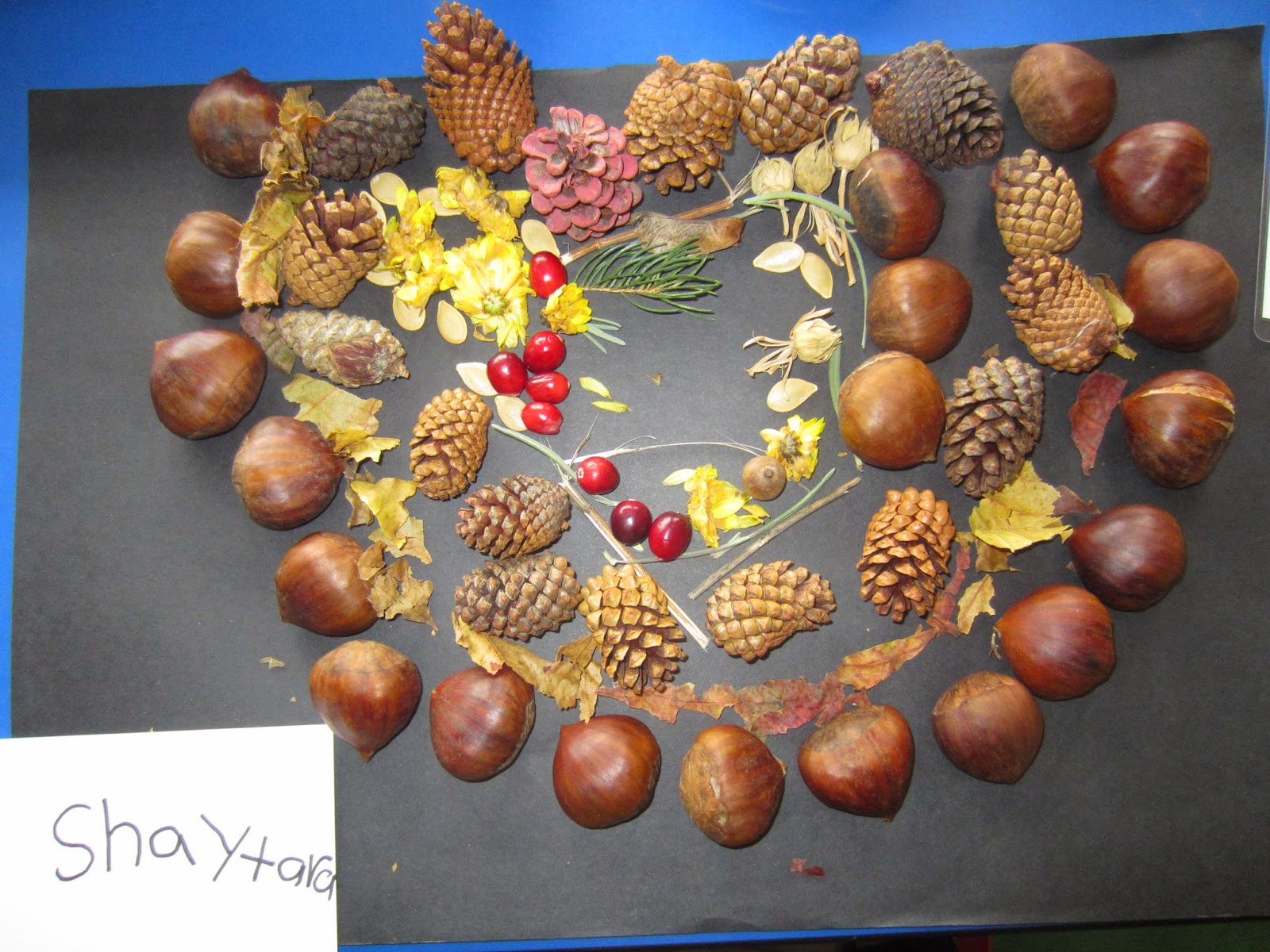
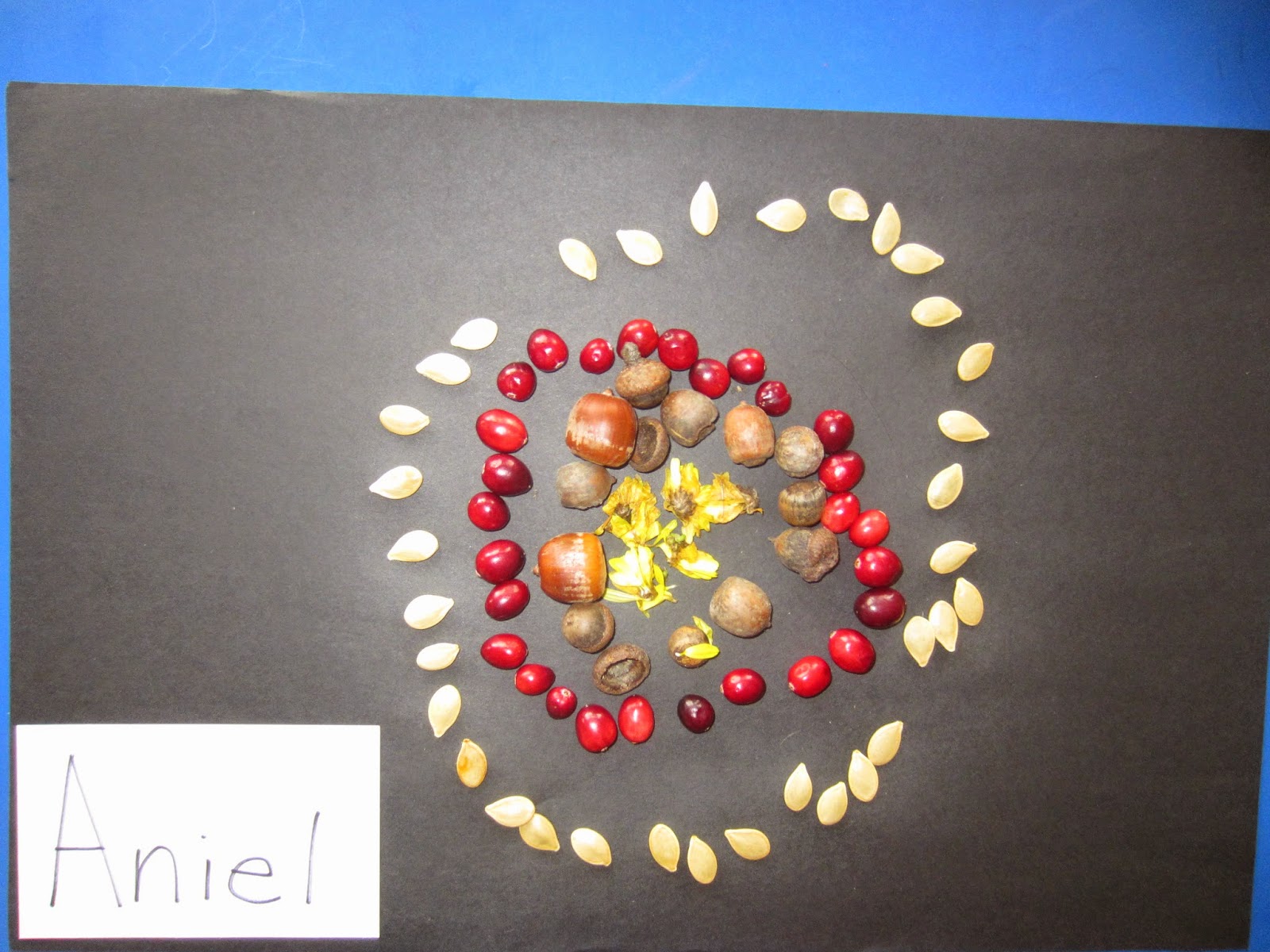
We have also explored the concept of the equation (equality) in visual arts as well. In addition to our observational drawings, illustrating the effects of the mass balance and weights, and our study of symmetry, we have recently focused on the circle. This has been extended to the clock, and most interestingly throughout the creation of mandalas in the classroom using natural materials.
I provided students with photographs of actual mandalas, as a reference and them let them create.


Here are our results. In the upcoming weeks, we will be discussing and critiquing the work of our peers and the relation to symmetry, geometry, and most importantly-balance and equality.
Suscribirse a:
Entradas (Atom)